

Public Relations and Communication
- Public Relations and Communication
- Executive and Staff Training
- Strategic Advising
- Negotiations
- Policy Review and Governance
- Economic Development
- Leadership Coaching and Mentorship
Executive and Staff Training
Protecting Indigenous land and resources requires careful planning, legal expertise, and strong advocacy. We assist nations in negotiating agreements, managing natural resources, and asserting their rights to ensure development aligns with community priorities. Our strategies focus on sustainability, economic empowerment, and land stewardship, ensuring that Indigenous communities retain control and benefit from their resources.

Strategic Advising
President Day has a history of successfully negotiating with multiple partners, as well as a history of opposition which resulted in permanent changes in laws, land use through the assertion of Indigenous rights in sensitive areas.

Examples of agreements include:
- Province of British Columbia – There were several agreements completed in partnership to create more certainty, partnership and prosperity under the following categories: economic development, capacity building, wildlife, mining, clean energy, mineral exploration, logging, and land use planning etc.
- Neighboring Tribes – Agreements were completed in partnership regarding wildlife, capacity building, employment/training, children/families, cultural revitalization and so forth. The 3Nations continues to be a shining example of where neighboring tribes can put aside their differences to focus on the best interests of their communities and children; this resulted in a 2018 Premier’s Award for Innovation.
- Internal Amongst Governments – The Tahltan Nation has three governments who made protocol agreements to clarify jurisdiction, negotiation processes, revenue sharing, information sharing, internal engagement processes, code of conducts and other arrangements which ensured political stability, unity and important decision-making processes.
- Internal Amongst Entities – The Tahltan Nation has various entities focused on investing funds, community development, economic development, social services, health and more. Multiple protocol agreements were forced to create more certainty, collaboration and prosperity for the Tahltan people, as well as certainty and efficiency for all the governments and entities involved.
- Industry – Impact Benefits Agreements (IBAs) were created with sector in the following industries: mining, mineral exploration, logging, clean energy and guide outfitting. Additional agreements could have been pursued with the jade mining industry and ecotourism industries.
Achieving the aforementioned agreements often took years of being strategic, building capacity and creating ethical and collaborative decision-making processes which included stakeholders both internal and external amongst the tribe. It often took compromise and patience, but other times it took hardline positions by the tribe. Every big goal took a different strategy and approach.
Sometimes Chad had to lead his people through opposition in order to achieve positive results and change later on. This was the case when roadblocks were had over wildlife in 2015, when mineral exploration projects were publicly opposed or protested, and when the Tahltan Nation publicly demanded an overhaul to the jade mining industry, amongst other issues. Indigenous peoples often need to be strategic to protect sacred lands, particularly when industry and/or government have a longstanding history of utilizing a particular area and have invested considerable funds into a particular area or project.
President Day’s strategic advice can go a long way with achieving an Indigenous government or organization short-term or long-term goals, and this will often require a wholistic and thoughtful approach as unique and nuanced as the organization or government itself.
Strategic advice will naturally go hand-in-hand with many of the other services offered by Thadu Consulting Corporation and its partners.
Negotiations
President Day has a lengthy track record of successful and precedent setting negotiations with the Province, Industry, Neighboring Tribes and internally amongst the Tahltan people and their governments/entities.
Examples of some of these agreements include:
- Red Chris Impact Benefit Agreementwith Imperial Metals through ratifying this agreement with 87% support from the Tahltan people who participated in the decision-making process (April 2015);
- Red Chris Mine Economic and Community Development Agreementwith the Province to ensure the Tahltan Nation receives a portion of the tax revenue generated on this project located in Tahltan Territory (2015);
- Tahltan Nation Protocol Agreement which clarified jurisdiction, revenue sharing, negotiation processes and other important aspects of how the Tahltan Central Government, Tahltan Band Council and Iskut Band Council would collaborate together in their pursuit of creating prosperity and certainty for the Tahltan people (July 2015);
- Tahltan Nation Protocol Agreement which clarified jurisdiction, revenue sharing, negotiation processes and other important aspects of how the Tahltan Central Government, Tahltan Band Council and Iskut Band Council would collaborate together in their pursuit of creating prosperity and certainty for the Tahltan people (July 2015);
- Tahltan-Guide Outfitter Agreement which established revenue-sharing, communication, information sharing protocols and a commitment to many other collaborative initiatives aimed at empowering both parties and suiting the best interests of the wildlife in Tahltan Territory (July 2015);
- Red Chris Mine Management Agreement with the Province of British Columbia which resulted in precedent-setting involvement and oversight for the Tahltan Nation over the activities and permits related to operations at the Red Chris Mine (January 2017);
- Klappan Plan with the Province of British Columbia to bring protection measures to 287,000 hectares for twenty years and certainty to how decisions will be made over 636,000 hectares of Tahltan Territory (February 2017);

Empowering Indigenous Communities
- Public Relations and Communication
- Executive and Staff Training
- Strategic Advising
- Negotiations
- Policy Review and Governance
- Economic Development
- Leadership Coaching and Mentorship
Economic Development
Economic growth requires strategic planning, market insights, and innovative solutions. Our Economic Development expertise helps businesses expand, attract investments, and navigate market challenges. We work with local governments, private enterprises, and economic institutions to develop policies and strategies that foster job creation, infrastructure development, and business expansion. By analyzing market trends, optimizing resource allocation, and implementing sustainable economic initiatives, we help communities and organizations unlock new opportunities for long-term prosperity.

Leadership Coaching and Mentorship
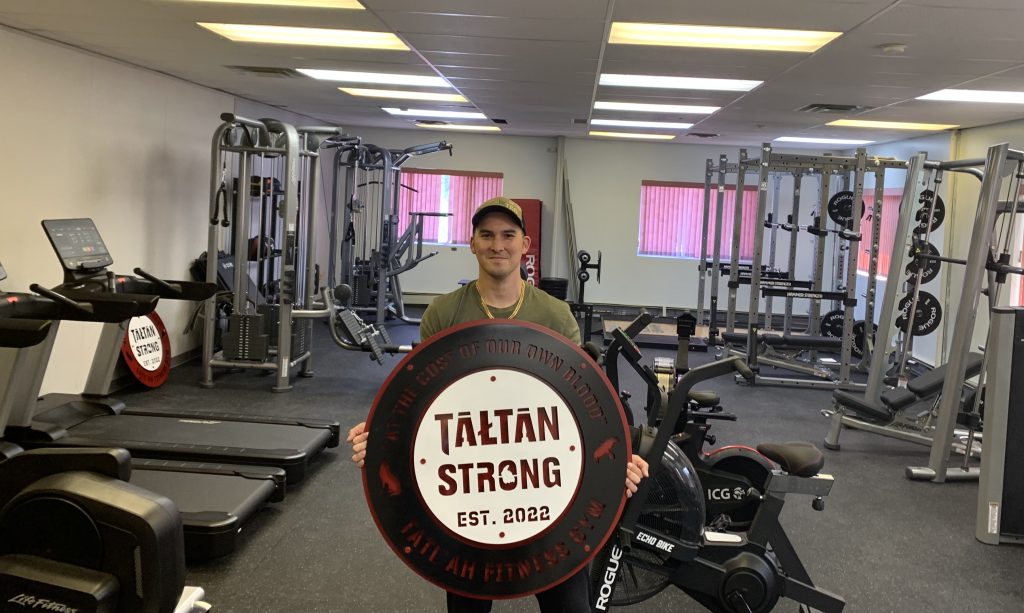
President Day became an elected leader of his people at the age of 25 while pursuing law school and helping raise four young children at home. Two years later, he became the Tahltan Nation’s Spokesperson and the executive and administrative leader of the Tahltan Central Government (TCG), which represents his nation’s collective rights and title. Being the President of the TCG required considerable travel commitments, 60+ hour work weeks and was extremely stressful in the early years when the government’s capacity, morale and staff numbers were low. Like many Indigenous leaders under constant pressure and scrutiny, Chad was often frustrated, depressed and increasingly feeling hopeless, betrayed and upset. To make matters worse, he was going through an awful separation with his former spouse and the family learned that his mother was diagnosed with cancer. He started gaining weight, drinking alcohol, lacking sleep and losing himself. In December of 2014, just six months into his new political role, President Day became hospitalized from a heart condition caused by fatigue and stress. He had to make significant changes to his lifestyle and mindset, and thereafter that’s exactly what he did. Nearly ten years after being hospitalized, and following several years of mentoring many Indigenous leaders and youth, President Day is now in a position to dedicate more of his time to empowering and assisting others who may be facing difficulties in their own work and/or familial environments.
Chad believes being an effective leader requires one to empower themselves in a wholistic way through four pillars: family, culture, health and livelihood. He believes effective leaders who have chosen public service as their calling and livelihood must dedicate ample time and commitment to their family, culture and health in order to become effective and sustainable in their important roles. Working for Indigenous peoples is extremely rewarding, but often very difficult on one’s spirit and mental/physical health for distinct reasons. When someone works for their own people, there are additional challenges being under scrutiny of those you love most in an area which you be connected to forever. For those not connected and related to the community, often times they endure hurtful and racist undertones and/or comments which would never be tolerated in other work settings. The historical drama, injustice and anger endured by Indigenous peoples is multifaceted and is usually passed on from one generation, though it may be expressed in different forms in the modern day. Indigenous organizations, communities and governments are usually very small and close-knit, and it may be difficult to speak with neutral individuals who can relate to your challenges and provide you with a safe space and sound advice on how to move forward in a good way.
Thadu Consulting Corporation can provide training, workshops and one-on-one services to assist those who may be looking for additional support.

Let’s build a smarter, stronger future—together.
Thadu Consulting Corporation – Your Partner for Industry Excellence.